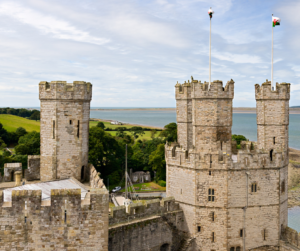
For most of us, the last time we noticed LED Lighting was when varying landmarks across North Wales (including Conwy Castle) were lit up in honour of the Queen’s 90th birthday celebrations for the weekend of the 11th and 12th of June, as well as Euro 2016. Or at the very least, that’s the last time we noticed LED lighting, despite it having myriad utility in the form of easily installable LED strips and LED rope Lighting.
It may surprise some to learn that LED Illumination technology is all around us.
LED is central to a lot of things we might not notice immediately: It’s been found to be a very legitimate way to increase crop yield without the need of chemicals or scary genetic modification. Massive leaps have been made in the Residential Lighting sector as well – LED lighting provides a very affordable way to light our homes. Retail and Exhibition Lighting has also benefited from LED technology – with recent advances in colour temperatures providing lighting and backdrop quality that we, as consumers are inevitably drawn to.
That’s not all though – Recent reports indicate that LED Technology will be integral to the Internet of Things in the future, and for the moment provides assistance in alleviating the symptoms of dementia. That’s quite a lot of things that LED lighting is part of!
We’ve maintained throughout many articles that LED lighting is integral to modern life, with a myriad of applications and uses, Yet LED Lightings most prevalent use is the fact that it is proven, effective, and superior way of reducing climate change.
The Global Lighting Challenge, a clean energy ministerial campaign, has gained ground over the past few years – and it is a challenge to Governments, Companies, manufacturers, NGOs, landlords and individuals – open to anyone who can buy, sell, or help change a lightbulb to transcend to highly efficient LED lamps.
Hypothetically, if the world was to change overnight, almost 801 Mt of C02 emissions would cease. That’s the same as the displacement of 684 coal-fired power plants across the world, or a saving of almost £85bn in global energy bills. Some UK councils are taking the bull by the horns and making substantial savings immediately. Take Reading Council as an example, the best performing Council in Berkshire and the 12th best in the UK.
In an effort to reduce carbon emissions, they have committed to upgrade all of their 11,329 street lights to LED energy efficient light bulbs. That’s 2,533 street lighting columns, 2578 sign lights and 890 illuminated bollards to be retrofitted to LED variants. While the planet and reducing carbon emissions is the focus of this scheme, it will pay in other ways. The new lighting will give better vision in the evenings, improves the feeling of safety for pedestrians, and reduces power consumption which in turn benefits the planet, and reduces your energy bills.
Image Credit: Ian D. Keating | CC by 2.0